Orchestrating the Twin Transition in Multinational Corporations: Technology Roadmapping for Green and Digital Global Business Services
RS-PO-1B: Innovation Policy, Regulation & Standards, ICE 32nd Ed.
2026-06-22
Orchestrating the Twin Transition in Multinational Corporations
Technology Roadmapping for Green and Digital Global Business Services
RS-PO-1B: Innovation Policy, Regulation & Standards, ICE 32nd Ed.
Monday, 22/June/2026: 3:00pm - 4:20pm; Location: Room Porto

🌱 Personal Background and Angle
Huang’s vision under scrutiny
Context: Structural Realignment & Digital Resonance
2026 GBS Landscape: Ecosystem Maturity
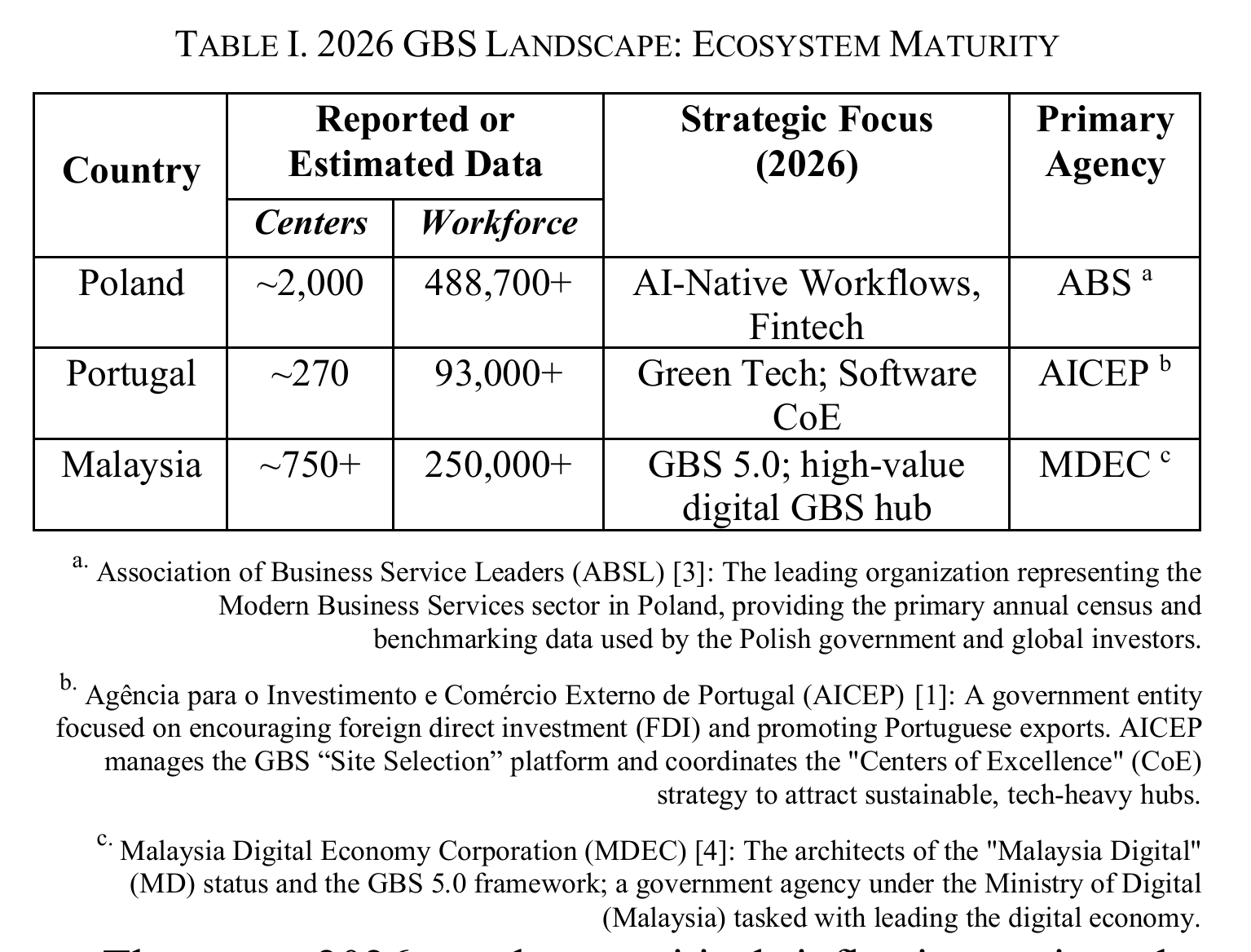
- Digital Resonance: Realignment toward high-tech automation and cybersecurity, superseding labor arbitrage.
- Twin Transition: GBS hubs as “living laboratories” harmonizing technical execution with sustainability.
- Innovation Ecosystems: Poland, Portugal, and Malaysia operationalizing transitions at scale.
👩🏫 Section IV: Findings
Conceptual Network Topology
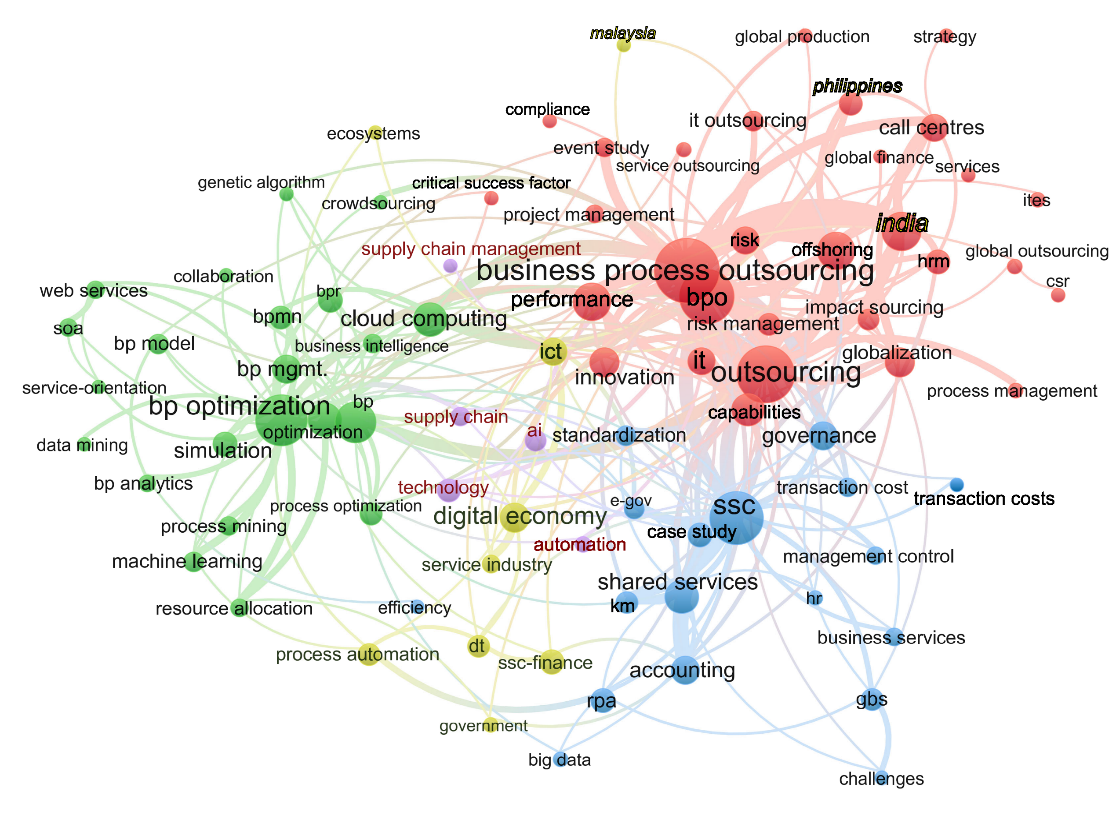
Fig 1: Conceptual network: keyword co-occurrence visualization
- Red Cluster: Legacy BPO/offshoring, anchored in risk and performance.
- Green Cluster: Technical “engine room” — process engineering and optimization.
- Blue Cluster: Structural maturation — SSCs and accounting maturing into integrated GBS frameworks.
- Yellow & Purple Clusters: Macro-strategic shift toward digital economy and AI-driven supply chains.
👩🏫 Section IV: Findings
Factorial Mapping & The Policy Gap
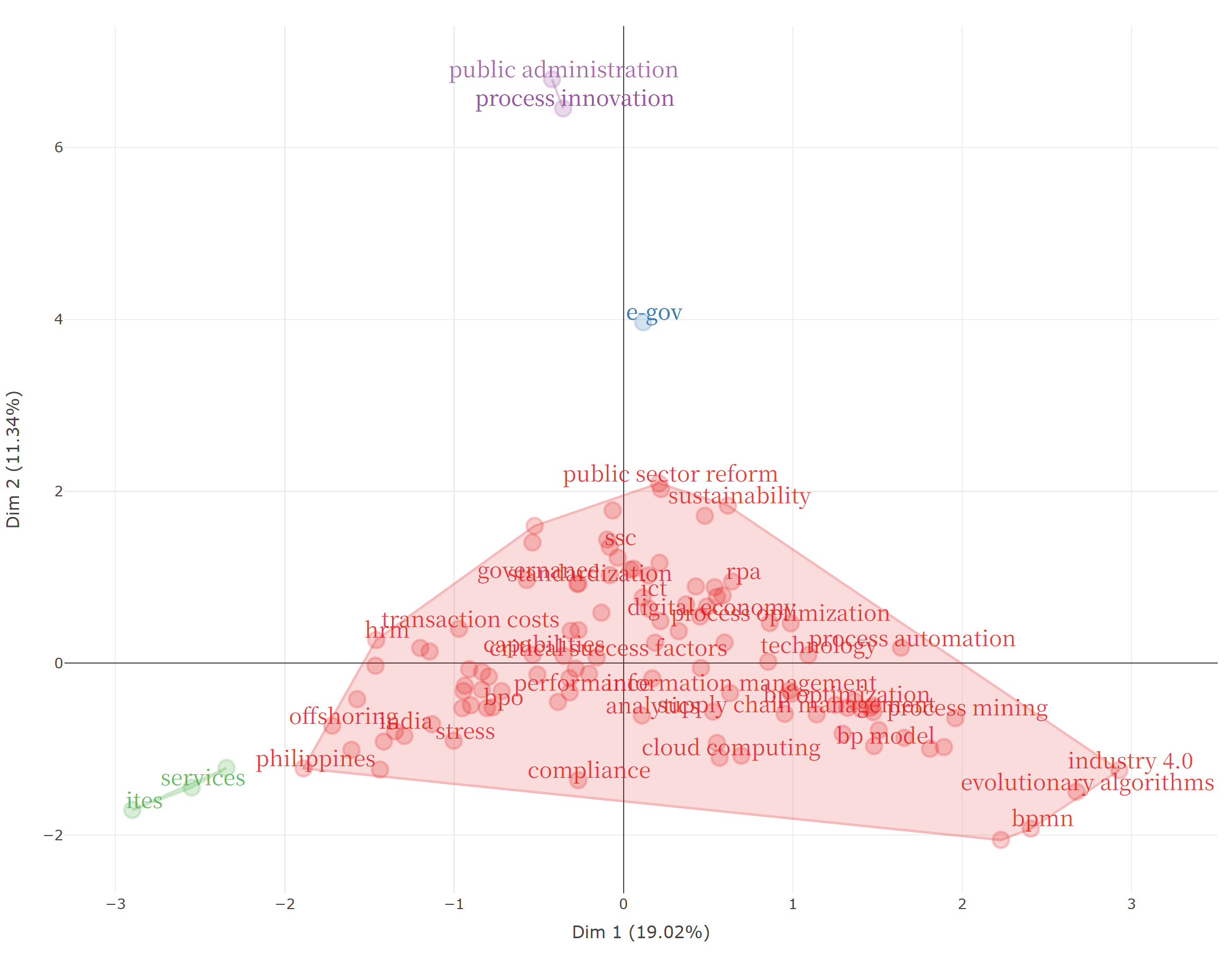
Fig 2: Factorial Analysis MCA Map
- High-Density Core: Alignment of cloud computing and process automation.
- Structural Hole: Isolation of public administration and policy clusters.
- Conceptual Inertia: Risk-mitigation metrics overshadowing green ICT tools.
👩🏫 Section IV: Findings
Thematic Evolution Materialization
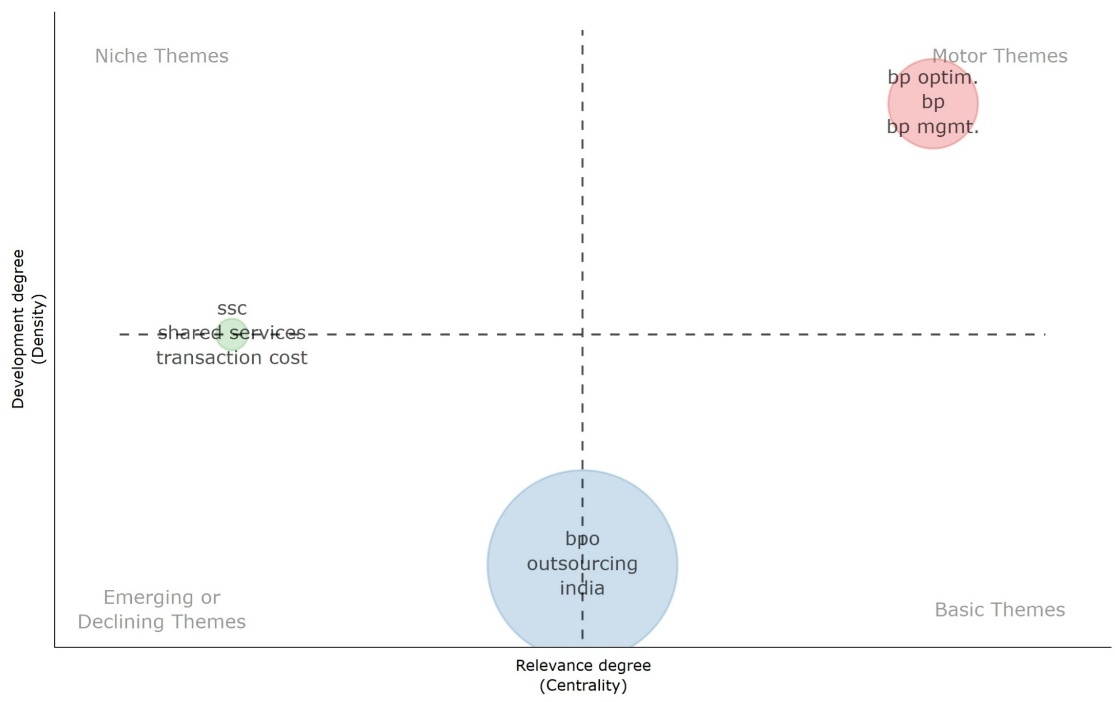
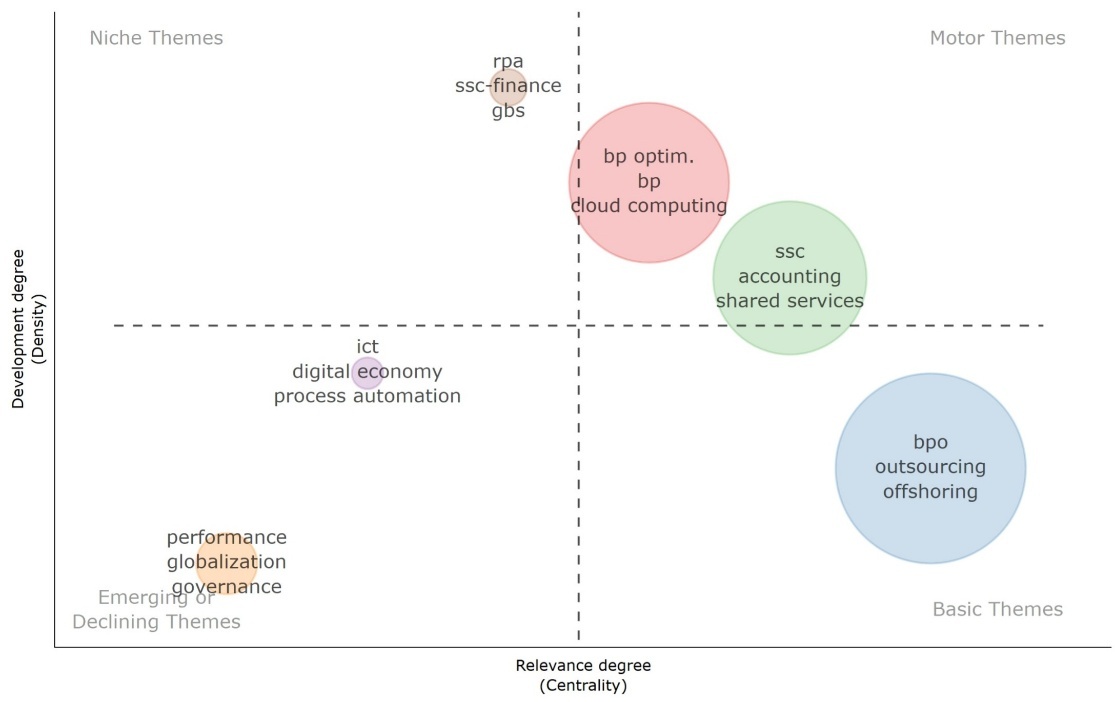
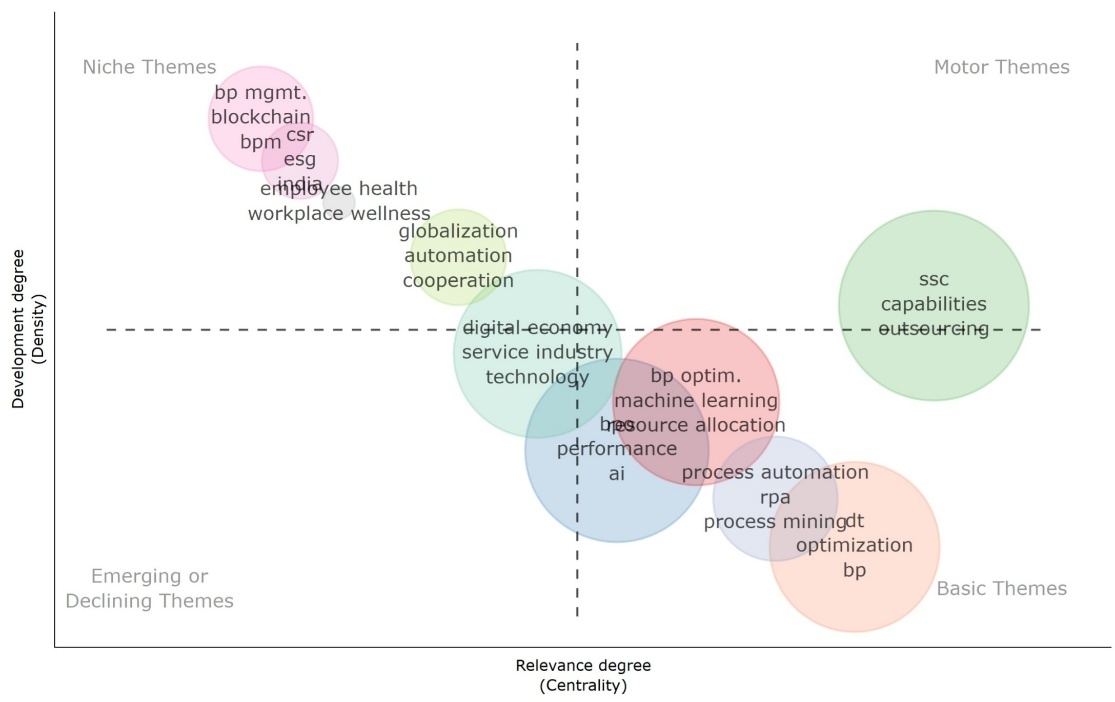
- Early Era (1993–2015): BPO, Business Process Optimization, and SSC dominate — efficiency, cost reduction, task centralization.
- Middle Era (2016–2020): RPA, performance metrics, and ICT emerge as bridging themes.
- Modern Horizon (2021–2026): Diversification into Digital Transformation, CSR, process automation, and the digital economy.
👩🏫 Section IV: Findings
Strategic Map: Niche Trajectories: Fig 4a-c



- Motor Themes: Capability-driven GBS, lean orchestration models.
- Basic Themes: Machine learning, robotic process automation, IT management.
- Niche Quadrant: ESG metrics, blockchain networks, employee wellness frameworks.
👩🏫 Section IV: Findings
Global Research Network & Nodes: Fig 5a-c
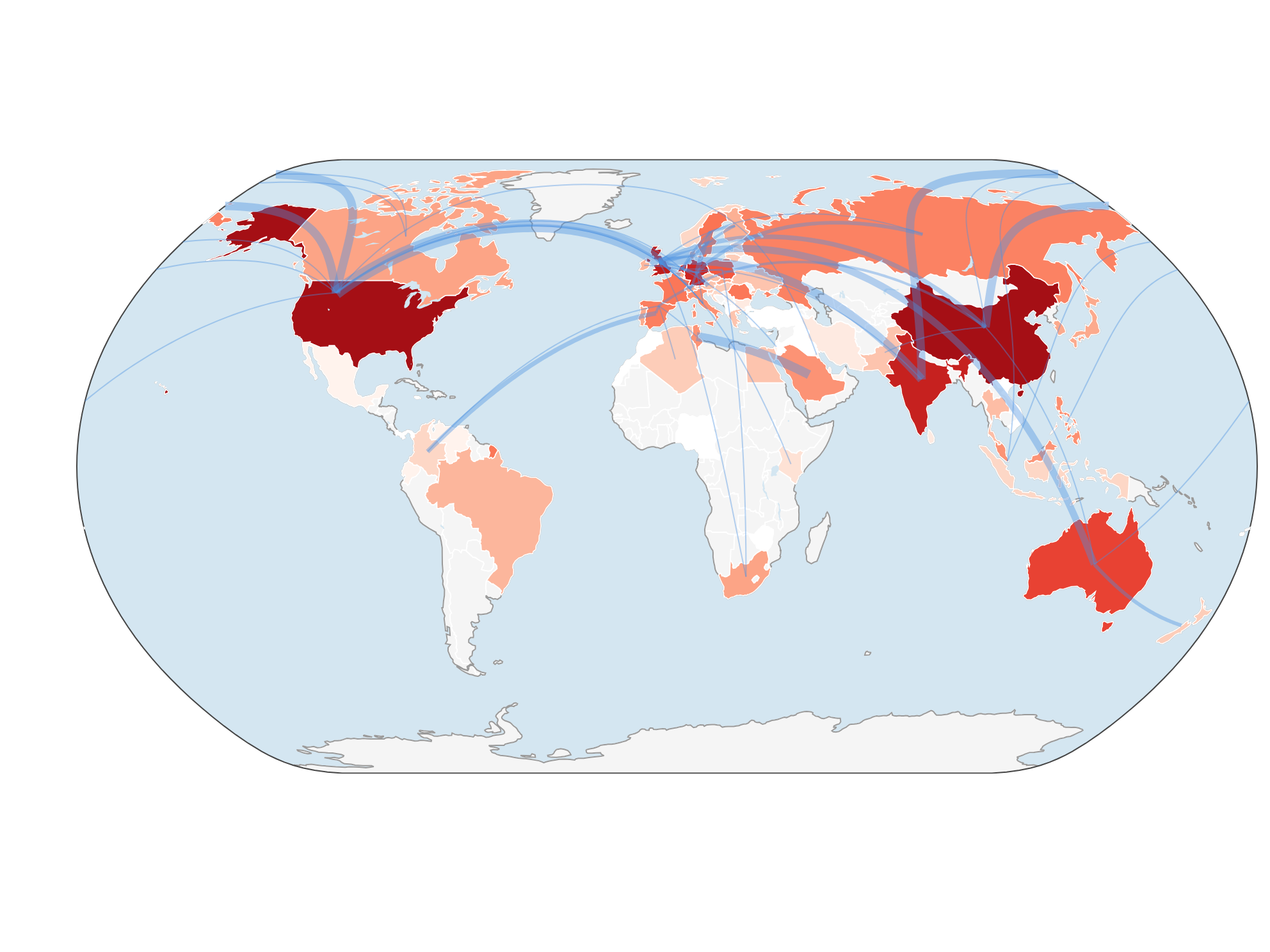
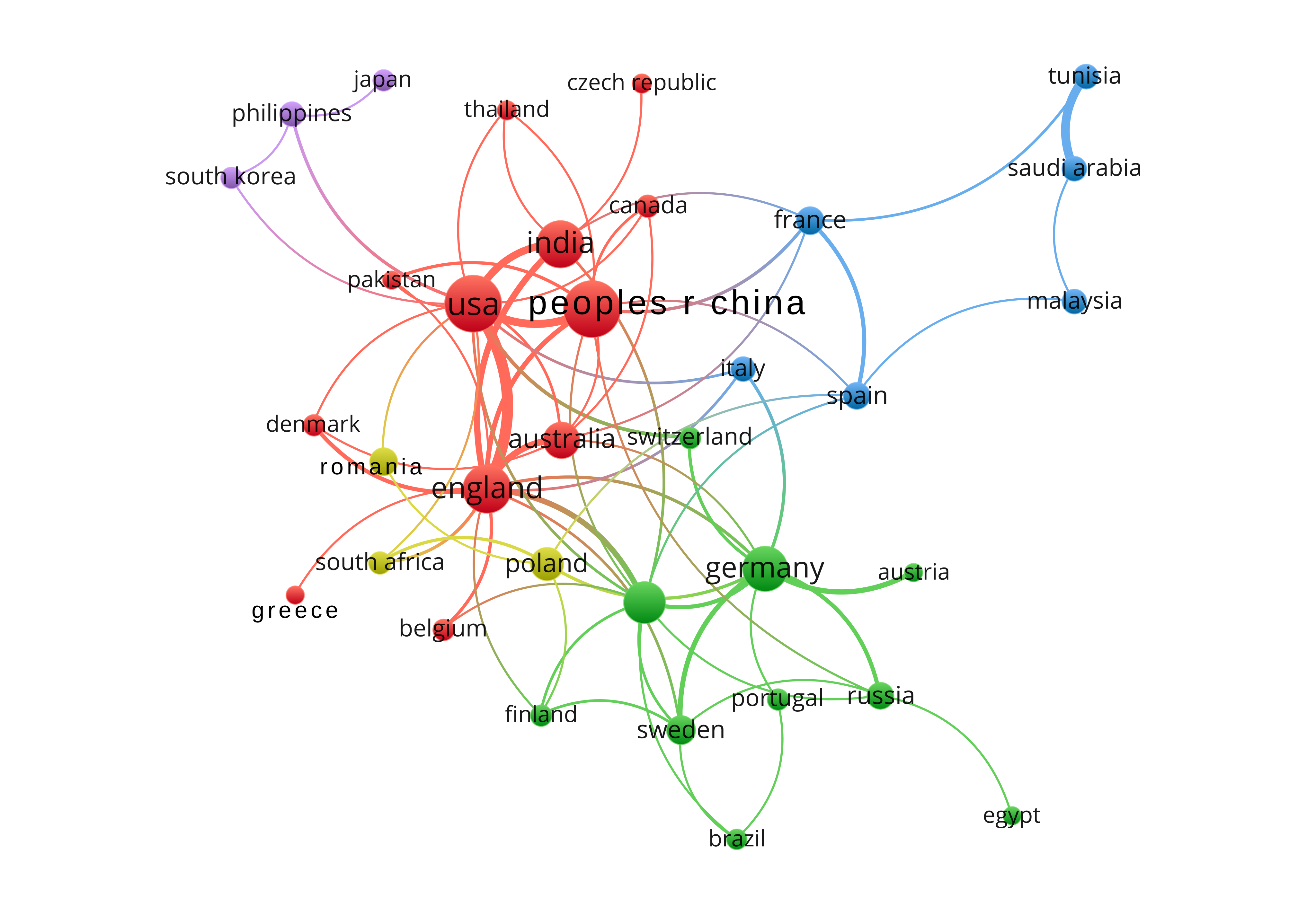
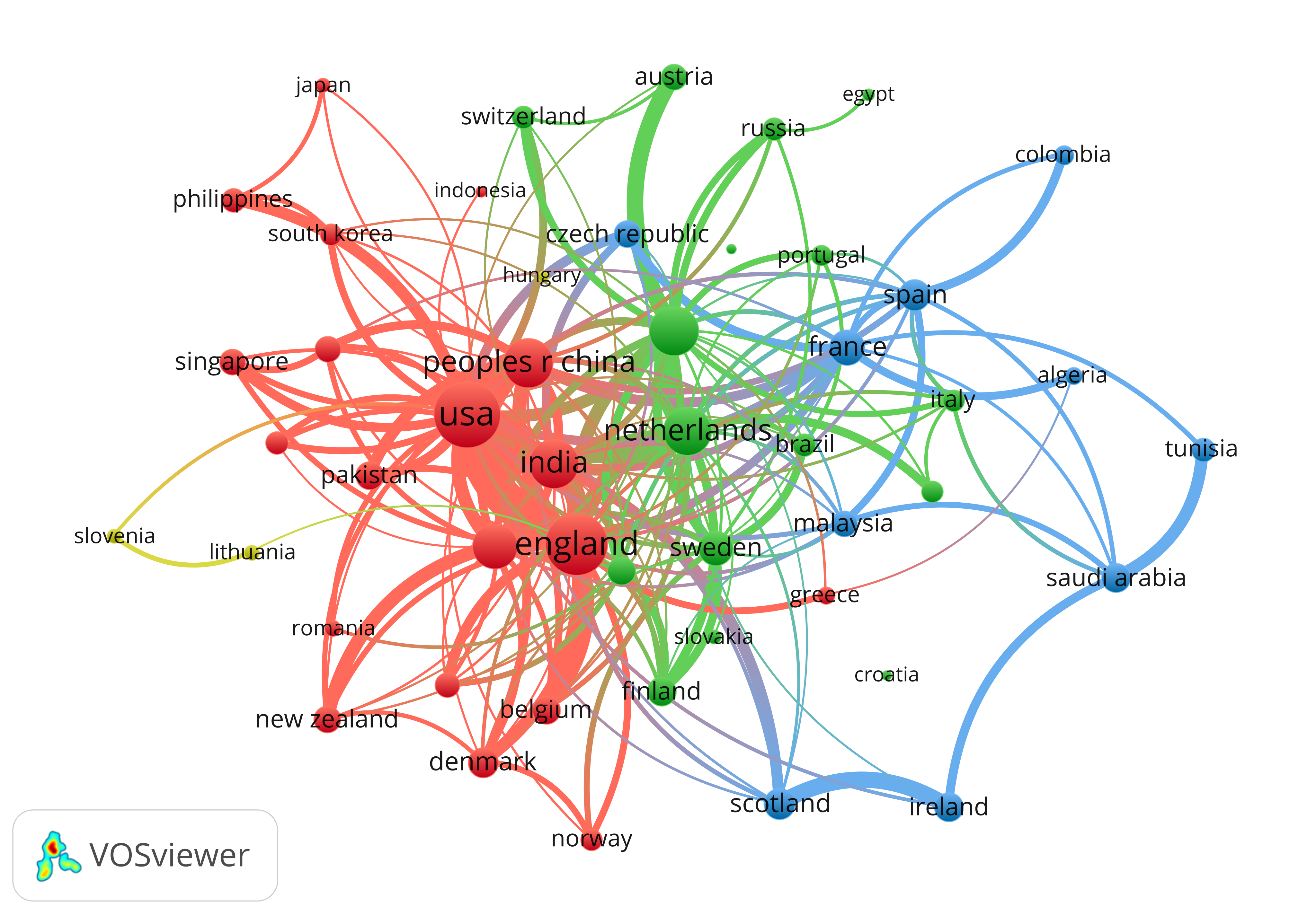
- Trans-Pacific Trajectories: High research links between major economies.
- Decoupling Realities: Academic collaboration stays highly integrated.
- Distributed Network: Shifting from single-site spokes to multi-hub setups.
💡 Section V: Discussion
Stakeholder Engagement Alignment
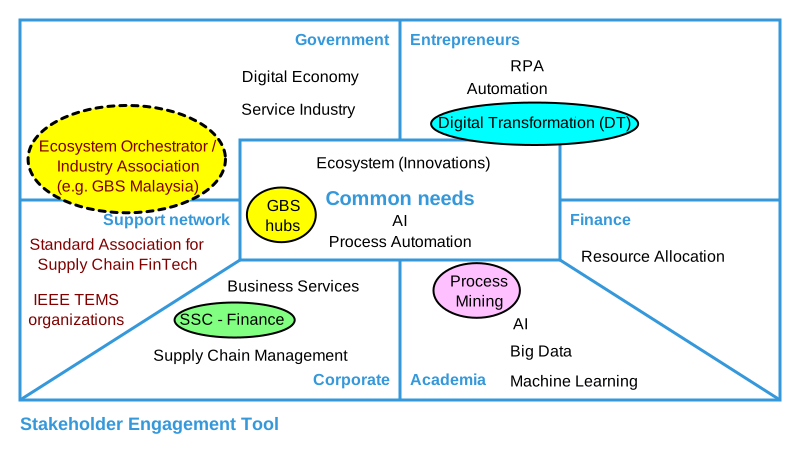
- Policy Thread: Translating environmental directives into standards.
- Talent Thread: Coordinating university programs with tech targets.
- Reward Thread: Linking green financial systems to audit checks.
💡 Section V: Discussion
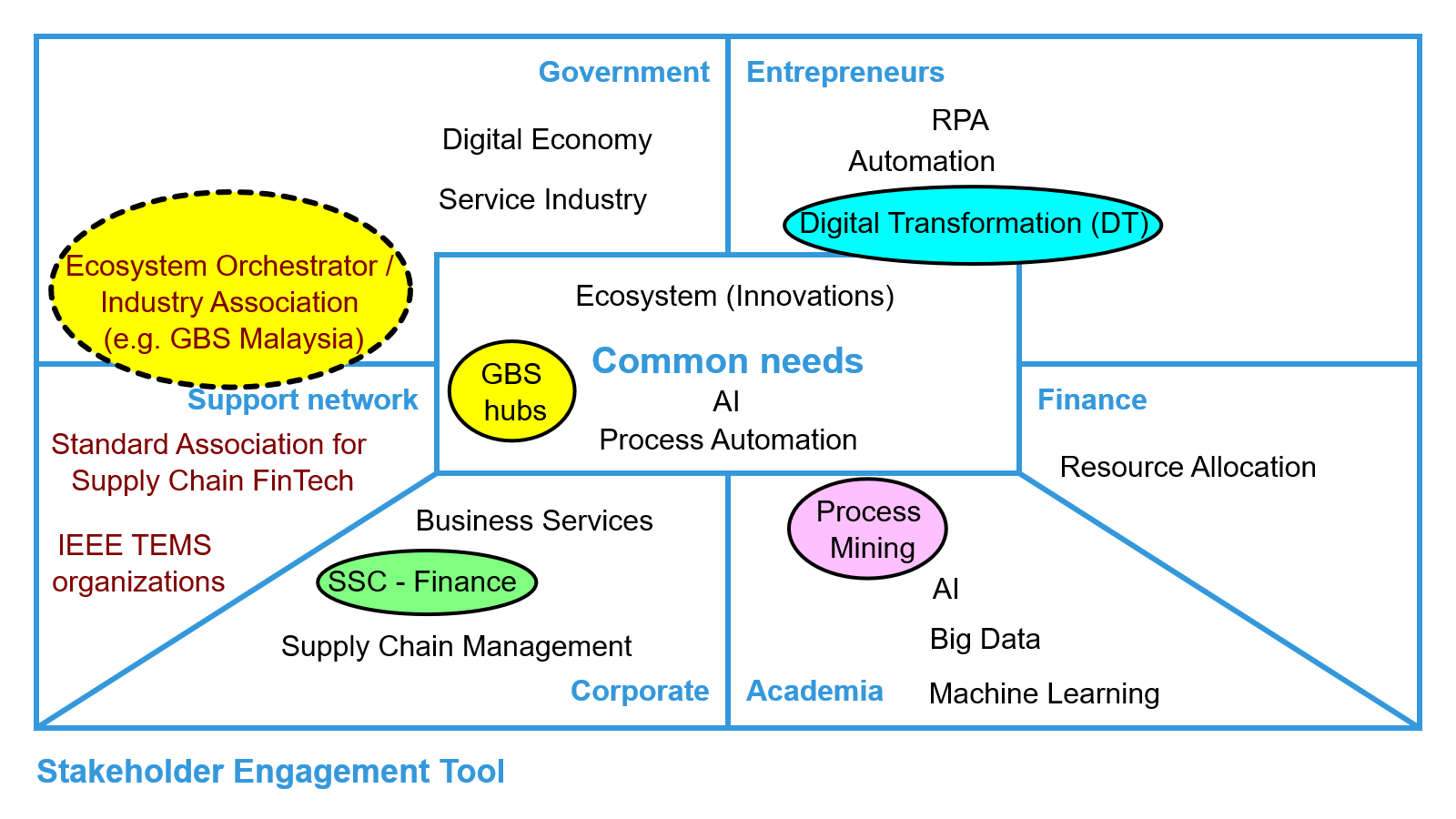
Deep-Dive: Reward-Orchestration & Living Lab Threads
- Reward-Orchestration: Evolves SSC-Finance into Supply Chain Finance via green FinTech, RegTech, and automated auditing.
- Living Lab: AI worflows: Gives entrepreneurs a sandbox to test AI-native workflows before company-wide rollout.
- Living Lab: regime-niche game: Alleviates MNCs’ historical information asymmetries, reframing reskilling as a regime-niche strategy.
- Talent-Innovation: Bridges entrepreneurial demand with academic research; D&I strategies and hybrid work models enable “Middle Power” hubs to capture higher-value delivery.
Fig. 6. Stakeholder Engagement Tool Canvas
💡 Section V: Discussion
Deep-Dive: Reward & Experimentation
- Green RegTech Integration: Using automated checks to guide sustainable supply actions.
- Democratizing Innovation: Creating sandbox spaces for AI process tests.
- Cultural Resilience: Protecting employee well-being amid technical transitions.
Fig. 6. Stakeholder Engagement Tool Canvas
🙏 Thank You for Your Attention!
Orchestrating the Twin Transition in Multinational Corporations
Technology Roadmapping for Green and Digital Global Business Services
RS-PO-1B: Innovation Policy, Regulation & Standards,
ICE 32nd Ed.